Soil Types Across Nebraska and Why They Matter
Nebraska’s soil diversity is one of the most important—and often overlooked—factors influencing farmland value, productivity, and long-term investment potential. From the rich loess soils of the eastern Corn Belt to the sandy, drought-prone soils of the Sandhills and western regions, soil characteristics vary widely across the state. Understanding these differences is critical for landowners, tenants, and investors making decisions about cropping systems, lease structures, and land management.
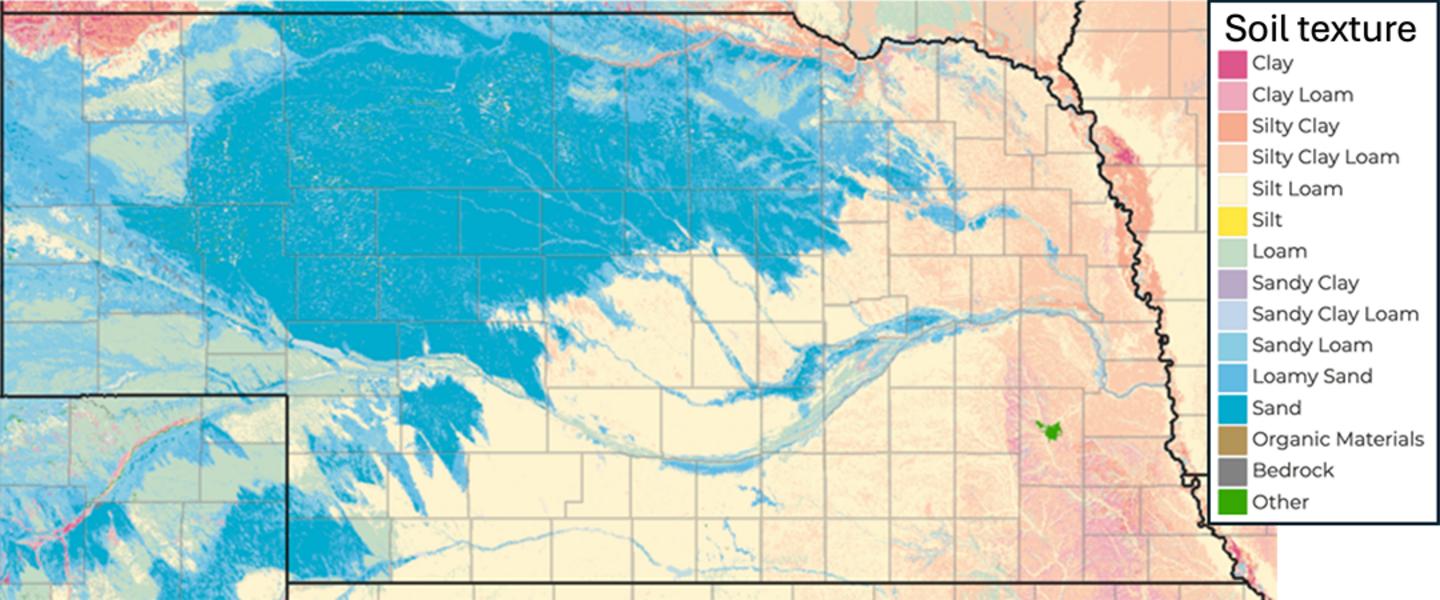
At the core of soil evaluation are several key properties: texture, organic matter content, drainage class, and nutrient availability. Soil texture (whether a soil is sandy, silty, or clay-based) affects how well it holds water and nutrients. Organic matter plays a major role in soil fertility and structure, while drainage determines how quickly excess water moves through the soil profile. Together, these factors directly influence crop choice and yield potential.
In eastern and central Nebraska, deep silt loam soils formed from wind-deposited loess are among the most productive in the world. These soils retain moisture well, provide excellent nutrient availability, and support consistent, high yields of crops like corn and soybeans. As a result, farmland in these regions often commands some of the highest per-acre values in the state. Strong productivity also supports higher cash rental rates, making these soils especially attractive to both operators and investors.
By contrast, the sandy soils found in the Nebraska Sandhills present a very different set of challenges and opportunities. These soils drain quickly and have lower water-holding capacity, making them less suitable for traditional row crops without irrigation. However, they are well-suited for grazing and livestock production. Native grasslands thrive in this environment, supporting Nebraska’s strong cattle industry. As a result, land use in these regions is often focused on ranching rather than intensive crop production.
To better understand and evaluate soil potential, landowners and tenants rely on tools provided by the USDA Natural Resources Conservation Service (NRCS). Soil maps, county surveys, and productivity indices, such as the Corn Suitability Rating (CSR) or similar local metrics, offer detailed insights into a property’s capabilities. These tools help quantify yield potential, guide pricing decisions, and provide a common language for lease negotiations.
Beyond valuation, soil information plays a critical role in day-to-day management decisions. Matching crop rotations to soil type can improve yields while preserving long-term soil health. In dryland areas, selecting drought-tolerant crops and implementing residue management practices can help reduce erosion and conserve limited moisture. Maintaining surface residue is especially important in preventing wind erosion, which can be a significant risk in lighter soils.
For irrigated farmland, soil management becomes a balancing act between water and fertility. Applying too much water can lead to nutrient leaching, while too little can limit crop performance. Understanding how specific soils respond to irrigation allows producers to fine-tune application timing and rates, maximizing both efficiency and profitability. Advances in precision agriculture have made it easier to manage these variables at a field-by-field—or even zone-by-zone—level.
Soil characteristics also play a meaningful role in long-term planning and estate strategy. High-productivity soils are often well-suited for stable, long-term cash rental agreements or crop-share leases that capitalize on consistent yields. Lower-productivity soils, on the other hand, may be better suited for alternative uses such as grazing, cover cropping, or enrollment in conservation programs. These approaches can still generate income while preserving the land’s natural resources.
Ultimately, understanding soil variability across Nebraska provides a foundation for smarter decision-making. Whether evaluating a land purchase, negotiating a lease, or planning for future generations, soil knowledge helps align expectations with reality. By leveraging tools like NRCS surveys and adopting management practices tailored to specific soil types, landowners and operators can protect productivity, sustain land value, and ensure long-term success in Nebraska agriculture.